




In 2021, I was a first-time lead pastor of a small congregation. I was single, paying my own bills, and wondering whether my next paycheck from the church would arrive on time. In that season, God clearly spoke to me and said that the church needed to plant a Dinner Church. I remember praying, “God, I need to grow this church. How do you expect me to start a whole new one?” God challenged my heart by reminding me that He had called me to the community I was in. I was forfeiting influence in most of the community because I was determined to stay in the church. The first night of Dinner Church was a huge step of faith, both personally and for our dying congregation. Over the last four and a half years, we’ve learned that funding a Dinner Church isn’t about having a large budget. It’s about building relationships, stewarding resources creatively, and trusting God’s provision. Here a menu of the most practical ways we’ve funded a weekly Jesus table in our community. Offering Box Each week, we placed a locked offering box on the dessert table. From the microphone, whoever is giving announcements that week will say something like, “The food here is always free! But if you would like to donate toward future meals, there’s a donation bin on the dessert table!” On average, we receive about one dollar per person in attendance. Keep it low-pressure and consistent. Over time, people begin to take ownership of the table. Community Connections Your mayor and town leaders have a vested interest in providing resources to the community. About twice a year, I go to our public town council meeting. I stand up during public comment, introduce myself, and give a 2-minute overview of our weekly meals. At the end, I give each council member a flyer and remind them that we are a resource if they come across anyone in need. Because of this, their employees donate all the food for our Thanksgiving meal each year, and they have given us a $31,500 grant because they know we exist as a valuable resource in the community. Once a year, we put a flyer for our dinner and candy in a bag or basket and take it to every local business with a note that says something like, “Thanks for being a valuable member of our community. If you know anyone who could use a meal, send them our way.” We also include information about how to sponsor one of our meals if their business would like to get involved. Many have. Donations In 2021 the World Wildlife Fund, Driven to Waste report revealed that 2.5 billion tons of food is wasted every year globally. That’s about 40% of all food produced. If that number feels too big, imagine every person throwing away 350 plates of food each year. There are literally tons of food to be had; you just have to know where to look and who to ask. We receive weekly donations from our local grocery store. We keep what we can use for dinner and distribute the rest on a grocery giveaway table each week. We are also members of our local food bank. We pay a small membership fee that gives us access to the food bank’s warehouse. Truck drivers are often responsible for disposing of any product that arrives damaged. We’ve received lots of perfectly good products in wrinkled boxes. Farmers are also often looking to move unsold and unused products. How do you get donations? Build relationships with people in your community! All of them! The ones with the food and the ones who need food. One of the most important lessons we’ve learned is this: don’t say no. If you take the full donation, even when it’s inconvenient, you become the easiest solution for that business. The easiest solution gets the first phone call next time. You will get items you don’t need. Share them with the community. Some of our best stories have come from a huge donation of a random item. Grants Grants should not be your main source of income, but they have been incredibly helpful in obtaining funding, equipment, and vehicles to make dinner happen each week. Organizations like Walmart, banks, realtor associations, and websites like 4Imprint offer easy-to-apply-for grants that can boost your impact. Before you apply for a grant, make sure you have your 501(c)(3) paperwork, statistics, and stories of how your dinner is impacting the community. Each grant requires different documentation, but these are common for most. Be creative in what grants you apply for. Your goal may be to meet needs and build community, but you are also likely rescuing food that would otherwise go to waste. You may also be providing opportunities for individuals who need community service. Each grant has a specific cause they care about. Don’t make things up, but make sure you recognize the full value you bring to the community so you can share that with organizations offering grants. I’ve found most of my grants by following local non-profits or para-church organizations that rely fully on grants. They usually have multiple full-time employees finding grants year round. When they thank a grant donor on their social media, I add it to my list of grants to explore. When we served that first meal, I wasn’t sure how we would sustain even a few weeks. Four and a half years later, God has provided over 30,000 meals, two vans, a trailer, freezers, and countless relationships that have transformed our community. My paycheck has never been late, and our budget has never been in the red. More importantly, people who once felt unseen now have a seat at the table. Dinner Church funding is not just a financial strategy. It is a discipleship journey. It teaches leaders and communities to trust that God provides through people, relationships, and unexpected sources. Provision rarely shows up as a lump sum. It often shows up as daily bread
In 2021, I was a first-time lead pastor of a small congregation. I was single, paying my own bills, and wondering whether my next paycheck from the church would arrive on time. In that season, God clearly spoke to me and said that the church needed to plant a Dinner Church. I remember praying, “God, I need to grow this church. How do you expect me to start a whole new one?” God challenged my heart by reminding me that He had called me to the community I was in. I was forfeiting influence in most of the community because I was determined to stay in the church. The first night of Dinner Church was a huge step of faith, both personally and for our dying congregation. Over the last four and a half years, we’ve learned that funding a Dinner Church isn’t about having a large budget. It’s about building relationships, stewarding resources creatively, and trusting God’s provision. Here a menu of the most practical ways we’ve funded a weekly Jesus table in our community. Offering Box Each week, we placed a locked offering box on the dessert table. From the microphone, whoever is giving announcements that week will say something like, “The food here is always free! But if you would like to donate toward future meals, there’s a donation bin on the dessert table!” On average, we receive about one dollar per person in attendance. Keep it low-pressure and consistent. Over time, people begin to take ownership of the table. Community Connections Your mayor and town leaders have a vested interest in providing resources to the community. About twice a year, I go to our public town council meeting. I stand up during public comment, introduce myself, and give a 2-minute overview of our weekly meals. At the end, I give each council member a flyer and remind them that we are a resource if they come across anyone in need. Because of this, their employees donate all the food for our Thanksgiving meal each year, and they have given us a $31,500 grant because they know we exist as a valuable resource in the community. Once a year, we put a flyer for our dinner and candy in a bag or basket and take it to every local business with a note that says something like, “Thanks for being a valuable member of our community. If you know anyone who could use a meal, send them our way.” We also include information about how to sponsor one of our meals if their business would like to get involved. Many have. Donations In 2021 the World Wildlife Fund, Driven to Waste report revealed that 2.5 billion tons of food is wasted every year globally. That’s about 40% of all food produced. If that number feels too big, imagine every person throwing away 350 plates of food each year. There are literally tons of food to be had; you just have to know where to look and who to ask. We receive weekly donations from our local grocery store. We keep what we can use for dinner and distribute the rest on a grocery giveaway table each week. We are also members of our local food bank. We pay a small membership fee that gives us access to the food bank’s warehouse. Truck drivers are often responsible for disposing of any product that arrives damaged. We’ve received lots of perfectly good products in wrinkled boxes. Farmers are also often looking to move unsold and unused products. How do you get donations? Build relationships with people in your community! All of them! The ones with the food and the ones who need food. One of the most important lessons we’ve learned is this: don’t say no. If you take the full donation, even when it’s inconvenient, you become the easiest solution for that business. The easiest solution gets the first phone call next time. You will get items you don’t need. Share them with the community. Some of our best stories have come from a huge donation of a random item. Grants Grants should not be your main source of income, but they have been incredibly helpful in obtaining funding, equipment, and vehicles to make dinner happen each week. Organizations like Walmart, banks, realtor associations, and websites like 4Imprint offer easy-to-apply-for grants that can boost your impact. Before you apply for a grant, make sure you have your 501(c)(3) paperwork, statistics, and stories of how your dinner is impacting the community. Each grant requires different documentation, but these are common for most. Be creative in what grants you apply for. Your goal may be to meet needs and build community, but you are also likely rescuing food that would otherwise go to waste. You may also be providing opportunities for individuals who need community service. Each grant has a specific cause they care about. Don’t make things up, but make sure you recognize the full value you bring to the community so you can share that with organizations offering grants. I’ve found most of my grants by following local non-profits or para-church organizations that rely fully on grants. They usually have multiple full-time employees finding grants year round. When they thank a grant donor on their social media, I add it to my list of grants to explore. When we served that first meal, I wasn’t sure how we would sustain even a few weeks. Four and a half years later, God has provided over 30,000 meals, two vans, a trailer, freezers, and countless relationships that have transformed our community. My paycheck has never been late, and our budget has never been in the red. More importantly, people who once felt unseen now have a seat at the table. Dinner Church funding is not just a financial strategy. It is a discipleship journey. It teaches leaders and communities to trust that God provides through people, relationships, and unexpected sources. Provision rarely shows up as a lump sum. It often shows up as daily bread
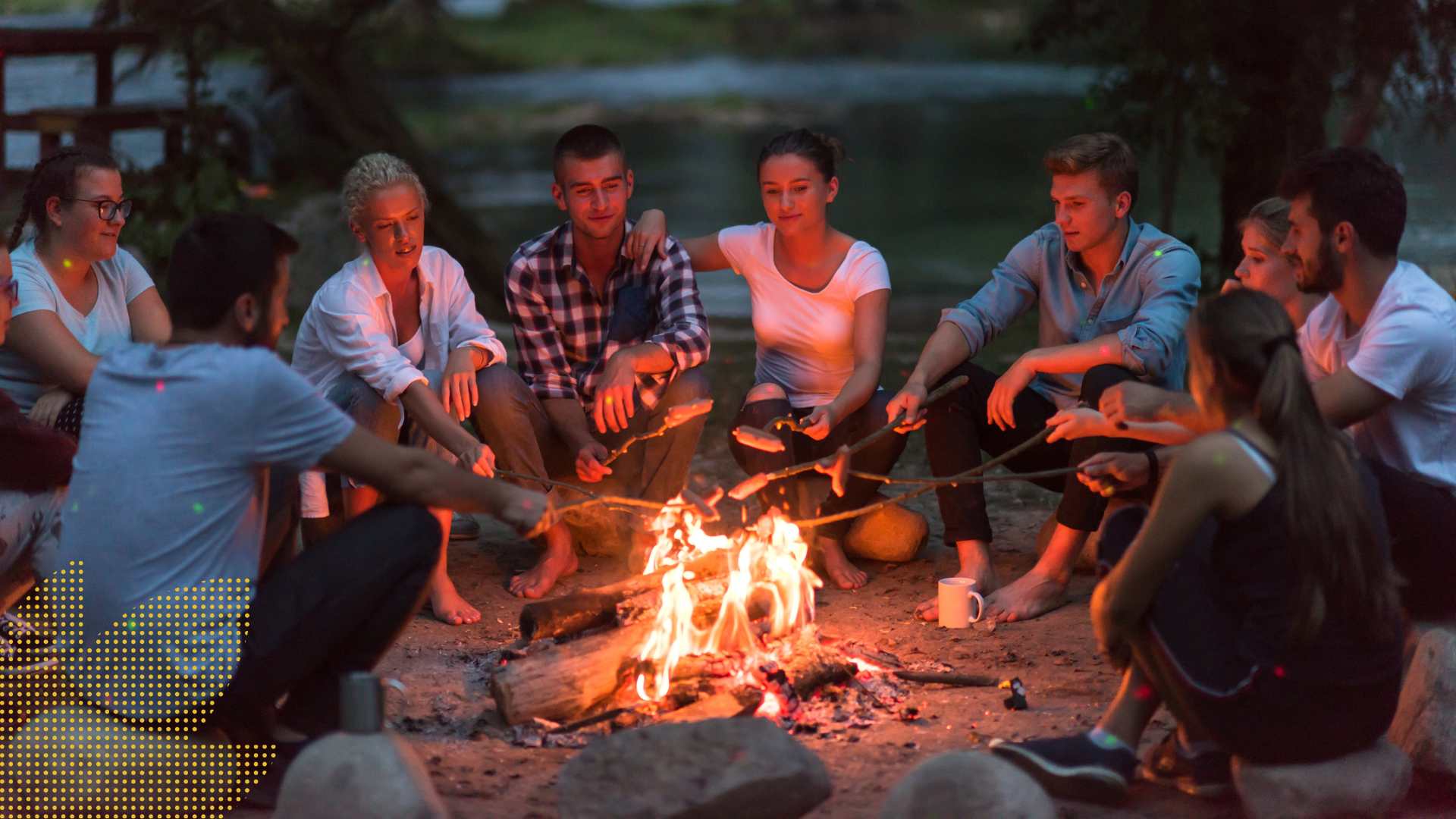
Imagine gathering with friends around a campfire, holding a cup of hot chocolate while the fire crackles in front of you. There’s something about sitting around a fire that changes the way we relate to one another. The focus shifts away from ourselves and toward community. People slow down. Sitting side-by-side instead of face-to-face somehow makes sharing easier. Stories, games, laughter, and meaningful conversations seem to come naturally. A Different Kind of Gathering One of my favorite images in Scripture is found after Jesus’ resurrection, when He cooks breakfast for His disciples by the fire on the shore. The simplicity of that moment has always stayed with me. Jesus didn’t just teach in synagogues or from mountaintops. He also gathered people around meals, around ordinary moments, and around shared experiences. What if creating space for spiritual conversations could be that simple? The Outdoors Don’t Have to Be Extreme When we think about outdoor Fresh Expressions, it’s easy to imagine epic hikes, mountain adventures, or long-distance runs. While those can absolutely become meaningful spaces for connection and discipleship, outdoor Fresh Expressions can also be much simpler. Sometimes they can look like a backyard fire pit. I live in a parsonage, and we have a fire pit built from stones taken from a house on our property that was lost in a fire decades ago. There’s something powerful about gathering people around those stones now sharing with one another in a place that once experienced loss by becoming a place of hospitality, storytelling, and connection. A campfire feels accessible in a way that an epic outdoor adventure may not. It doesn’t require expensive gear, advanced skills, or being highly athletic. Almost anyone can gather around a fire, and yet those gatherings can become deeply meaningful spaces for connection, belonging, and spiritual curiosity. I’ve been to campfires with potlucks. I’ve cooked meals over the fire and baked sourdough bread in the coals. I’ve played ridiculous games around campfires with friends. I’ve shared campfires with strangers while camping and shared them with lifelong friends late into the night. I’ve watched bears wander by in the distance. I’ve sat beside the fire with my husband, talking for hours about what God is doing in our lives and communities. Again and again, I’ve seen how the outdoors create space for deeper conversations. Sometimes Mission Starts Small That’s really what the Outdoor Incubator is about. It’s not about creating extreme outdoor experiences or becoming an expert adventurer. It’s about helping leaders discover simple, meaningful ways to use the outdoors to connect with people in their communities. It’s about creating spaces where people who are curious about faith can encounter authentic community and begin exploring what a relationship with Jesus might look like. Sometimes mission starts with something as simple as lighting a fire, pulling up a chair, and making space for conversation.

On the waters of Northwestern Pennsylvania , the steady rhythm of paddles cuts through the quiet—conversation drifting between kayaks, laughter echoing across the surface, and the beauty of creation all around. It doesn’t look like church. But it is. Here’s a quick look at what it is, how it works, and why it matters. What It Is Sacred Streams Kayaking is a Fresh Expression of church led by Jeff St. Clair, pastor of Saegertown United Methodist Church in Northwestern Pennsylvania. What began in Florida as a simple way to meet people on the water has continued in a new context—proving that a relational, outdoor expression of church can take root wherever people are. Today, it brings together church members and neighbors for kayaking, conversation, and simple spiritual practices. How It Works Participants gather for a kayaking trip, beginning with a brief time of prayer, scripture, and reflection before launching onto the water. As they paddle, conversations unfold naturally—creating space for relationships to deepen and faith to be explored in an unhurried, relational way. Open invitations are shared through social media and word of mouth, and partnerships with local outfitters help keep the experience accessible. Why It Matters Sacred Streams Kayaking reaches people who may never step inside a church building but are open to connection, community, and spiritual conversation. By meeting people in a place they already love—the water—it removes barriers and creates space for authentic relationships and encounters with God. It also offers a compelling reminder to other leaders: what starts as a small, context-specific idea can be reimagined and lived out in new places—wherever God leads. This snapshot was developed through thoughtful research using publicly available sources, including websites, news articles, community updates and a brief conversation with the pioneer.

If you’ve ever felt like your ministry is unseen, slow, or harder than you expected—you’re not alone. In this episode of the Rural Renewal Podcast, Sam Peters shares wisdom from The Heart of a Small Town Pastor , offering encouragement for leaders who are in it for the long haul. From building meaningful relationships to leading with patience and protecting your family, this conversation is a reminder that God is at work in the ordinary, everyday faithfulness of pastoral life. Sam Peters is a pastor, author, and church coach with over four decades of experience in small-town and rural ministry. After retiring from bi-vocational pastoral work in 2024, he now encourages and equips leaders through Small Church Coaching. His newest book, The Heart of a Small Town Pastor , is a work of fiction shaped by real ministry experience—offering wisdom on leadership, perseverance, and the quiet faithfulness of shepherding a local church. Sam also creates Worship Rising, a weekly resource to help believers prepare for Sunday worship. He lives in Kentucky with his wife, Joyce. Chris and Kathleen Blackey , are hosts of the Rural Renewal Podcast. Since 2010, together they have served as co-pastors at the First Baptist Church of South Londonderry, Vermont. The Blackeys live in South Londonderry, Vermont with their children – Sarah, Daniel, and Priscilla, as well as their cat, dog, and chickens. Related Resources: The Heart of a Small Town Pastor (Amazon) Join our Facebook group: Rural Renewal Podcast Community Email us: podcasts@freshexpressions.com Subscribe & Review Help us get the word out by subscribing and leaving a review for Rural Renewal Podcast on your favorite platform. Apple Podcasts Spotify Google Podcasts

It started with a contradiction. My husband loves people. I… don't. At least not in the way that requires constant scheduling, cooking, hosting, and coordinating calendars weeks in advance. We were both tired. Tired of trying to find time for the people we actually wanted to see. Tired of the back-and-forth: "When are you free?” "What about next week?” "Let's try next month." Tired of cooking one more dinner or paying for another meal out that wasn't really designed to include kids. And underneath all of that was something deeper: Community had become… thin. We waved at neighbors in the summer. South Dakota winters kept everyone inside. Friends we loved were reduced to text messages. At the same time, we were aware of something bigger. In 2023, the U.S. Surgeon General named loneliness and isolation a public health crisis. We didn't need a report to tell us that, but it gave language to what we were already feeling. So instead of asking, “How do we schedule more time with people?” We started asking a different question: What if we stopped scheduling… and simply opened our door? The First Sunday We didn't overthink it. We subscribed to a simple online invitation service and sent one message: First Sunday of the month. Come as you are. Bring a chair, something to share, and your whole self. No RSVP pressure. No expectations. No religious programming. Just… come. The first time we did it, about 80 people showed up. Neighbors. Friends. Colleagues. People from completely different parts of our lives. I remember one moment so clearly: A colleague walked in and locked eyes with one of our friends. They paused, trying to place each other. And then it clicked. Their faces lit up with this contagious, almost childlike joy. That's when I realized: This wasn't just about us hosting people. It was about people discovering each other. And here's the part that surprised me most: I left that night… full. As someone who doesn't naturally "like people," I expected to feel drained. Instead, I felt refreshed. Joyful. Grounded in a way I hadn't expected. And that has been true almost every single time since. What a First Sunday Actually Looks Like It's simpler than you're probably imagining. There is no program. There is no agenda. Instead, there is a rhythm. The kids start decorating sometime during the day. I plan a dish earlier in the week—always something vegetarian and kid-friendly. Around 4:00 PM, we set out chairs, drinks, and paper goods. At 4:30, we put up a simple sign: "Come in." From 5:00–8:00 PM, the front door is open. That's it. People come and go. They bring food. Or don't. They sit. Talk. Laugh. Sometimes debate real-life things. Yes, sometimes those conversations get a little uncomfortable. Someone has a strong opinion. Someone else is quieter. But here's what we've noticed: It has never stopped people from coming back. By 8:00 PM, we take the sign down. By 9:00 PM, everything is cleaned up. And my role? Not a host. Not a manager. Steward of the space. I don't micromanage. I couldn't. If this required more structure, we wouldn't still be doing it. The Unexpected Guests One of the most striking things has been who shows up. Yes, there are church-going people. But there are also: People who grew up in church and left People who were hurt by the church People who have no connection to church at all Street ministers Curious neighbors And here's what's surprising: You can't tell the difference. There is no visible line between "church people" and "non-church people." In fact, the people who are disconnected from church often show up with the most curiosity. They ask questions about life, about faith, about meaning, but in a way that feels relaxed, not pressured. When we ask people why they come, the answers are simple: "My kids and I feel welcome here." "It's joyful." "I leave feeling refreshed." "I feel connected again." There is one neighbor who refuses to give us their phone number. They're cautious, perhaps even a little suspicious. And yet, they never miss a chance to ask: "What's the theme for next month?" The Children Changed Everything If I'm honest, the children have become the heart of this. After the first few gatherings, they took over. One Sunday, I was away preaching when my husband called: "The kids are moving furniture and redecorating the house." My response? "Don’t be a church basement lady. Let them." And they did. They created themes. Decorations. Activities. They even started their own fundraiser—completely on their own. They've raised money for: The rainforest A street ministry The Humane Society They made art. Organized raffles. Hosted an art show. What I've learned from them is this: Everyone has gifts waiting to be released. Sometimes all they need is space. Where the Gospel Shows Up (Without Announcing It) We don't label this as church. There's no sermon. No liturgy. But if you look closely, the shape might feel familiar. People gather. Food is shared. Strangers become neighbors. Stories are exchanged. People leave changed, even if just a little. Jesus did a lot of his work like this. At tables. At weddings. On hillsides with thousands of people sharing food. There was a rhythm to it. A pattern. A kind of open-door invitation: "You want to come? Come." That's what this feels like. "Come as you are" isn't a slogan here. It means: Come tired Come joyful Come skeptical Come curious Come exactly as you ask Sometimes that means someone just walks across the street because they're too depleted to do anything more. And that is enough. What Has Changed Something has shifted. In our family We share a sense of excitement around something we do together. It's not a chore, it’s something we look forward to. In our neighborhood We are known, not for a title or a role, but as the people who open their home. In my own faith I find myself asking new questions: What is Christian community, really? How does it grow organically? What does it need to thrive? What might need to shift in the church to make space for this? We are also aware of what's still missing. Our neighborhood is largely white. We want to see more cultural diversity. We're working on it, but it's a reminder that intentionality still matters. What Has Been Hard This isn't perfect. Winter attendance drops Sometimes people think, "I'll go next month." Our pets get anxious (they're kenneled during gatherings) We've had to set boundaries, especially around private spaces At one point, kids ignored our daughter's request to stay out of her room. Things were broken. That meant we had to be clear: You are welcome here—when you respect each other. And then there's the quiet temptation we all know: Measuring success by numbers. But connection doesn't work that way. It happens when two or three people are gathered. It happens in small moments, not just big turnouts. Why This Works (And Stays Sustainable) It works because it's simple. It happens once a month, not every week It costs almost nothing People bring what they can There is no pressure to perform People don't come to your house. People come for people. And if no one comes? The kids already solved that. They walk around the neighborhood and ring doorbells: "Hey, want to come over?" Three Things We've Learned Exhaustion can be transformative. Keep it simple. Don't overthink it. What Might Be Possible for You? We're still asking questions. Maybe that's the point. What if the future of community isn't something we design perfectly? But something we grow, imperfectly, together? What if it starts smaller than we think? What is something you already love to do? Who lives near you that you barely know? What would it look like to simply say: "Hey… want to come over?" You don't need 80 people. You could start with 4-5 neighbors. Maybe just 10 contacts on your phone. Throw open your door to food, laughter, and conversation as a first step. Because sometimes the most meaningful expressions of community don’t begin with a one year plan. They begin with a question and a door left open.

What happens when the vision of Fresh Expressions is translated not only into another language, but into another cultural context? In this episode, we talk with Eliseo Mejia, who translated and contextualized Expresiones Divinas, the Spanish edition of Travis Collins’ book on Fresh Expressions. Eliseo shares how the ideas behind Fresh Expressions connect with the rhythms, relationships, and everyday spaces of Hispanic communities across the U.S. We also explore why making resources available in Spanish matters, because it is opening the door for more pastors and leaders to imagine new forms of church in their own contexts. Our hope is simple: to help place this resource into the hands of Spanish-speaking leaders and churches who are ready to cultivate new communities of faith where people already are. Rev. Dr. Eliseo A. Mejia is a highly regarded global coach, writer, missiologist, pastor, and church planting leader. He imparts his knowledge and wisdom as a teacher at Asbury Seminary in Willmore, Kentucky, and United Theological in Dayton, Ohio. In addition to his teaching roles, Dr. Mejia guides architects in diverse cultural and country settings, helping them navigate all stages of innovative projects from inception to completion. This is a BONUS episode of the Fresh Expression podcast. The Fresh Expressions podcast is currently in its seventh season where we are diving into the streams of Fresh Expressions — from senior adults and recovery ministry, to arts, outdoors, recreation, and more. Each month, you’ll hear directly from practitioners who are navigating these fresh ways of being church in the world. Their stories will spark your imagination and encourage you to see where God is already at work in your community and how you might join in! So whether you’re a pastor, lay leader, or simply curious about how church can thrive beyond the walls, join us for Season seven of the Fresh Expressions Podcast. Related Resources:

What if recovery isn’t a niche ministry—but a universal reality? In this episode, Heather sits down with pastor and recovery leader Jorge Acevedo to explore how the church can better understand addiction, healing, and the power of recovery communities. Drawing from decades of experience, Jorge challenges assumptions, shares personal stories, and invites leaders to recognize where God is already at work—often outside traditional church walls. Jorge Acevedo has been transformed by grace and now lives for one mission: connecting people to Jesus and the Church. Raised partly in Puerto Rico and moved early to the U.S., he rose from addiction in his youth to lead and mentor across generations. For 27 years, he served as Lead Pastor of Grace Church, a multi-site United Methodist congregation in Southwest Florida, and in September 2023 he retired from 39 years of pastoral ministry. Now he coaches, writes, and speaks through Spiritual Leadership Inc. This season, we’re diving into the streams of Fresh Expressions — from senior adults and recovery ministry, to arts, outdoors, recreation, and more. Each month, you’ll hear directly from practitioners who are navigating these fresh ways of being church in the world. Their stories will spark your imagination and encourage you to see where God is already at work in your community and how you might join in! So whether you’re a pastor, lay leader, or simply curious about how church can thrive beyond the walls, join us for Season seven of the Fresh Expressions Podcast. Related Resources:

As Holy Week approaches, my mind often drifts back to an Easter I spent in Romania. I’ve tried, more than once, to recreate what I experienced there—but I’ve never quite been able to. To understand why, I have to go back a bit. In 2006, my church planned a mission trip to Romania. A group of ten women would spend their days in a hospital caring for abandoned babies. I felt drawn to go—but I hesitated. My own children were young, and the thought of leaving them for that long felt overwhelming. Over time, that hesitation turned into conviction. I sensed God asking me to trust Him—not just with the children I would care for overseas, but with the ones I would leave at home. So I made a quiet promise: If someone drops out and they call me, I’ll go. Two weeks before the trip, the call came. I said yes—but I was completely unprepared. My passport wasn’t even up to date. And yet, one by one, every obstacle moved. It was as if God was clearing the path ahead of me. Our first full day in Romania was Resurrection Sunday. We walked to church through streets lined with stray dogs and crumbling sidewalks. Trash piled up on corners. The buildings felt worn, almost colorless. It wasn’t beautiful in the way we often define beauty. But what struck me wasn’t what I saw—it was what I felt. Overwhelming joy. As we walked, every person we passed greeted us the same way: “Hristos a înviat!”— Christ is risen! And the response came just as quickly, just as joyfully: “Adevărat a înviat!”— He is risen indeed! This joy wasn’t reserved for inside the church walls. It filled the streets. It echoed on buses, in restaurants, on sidewalks. Everywhere we went, people proclaimed it to one another—strangers, friends, everyone. And when we arrived at the church, the joy only deepened. There were warm embraces, double cheek kisses, and then again that same declaration— Christ is risen! —spoken with a kind of wholehearted delight that caught me off guard. This wasn’t a culture known for outward emotion. And yet, here it was—unfiltered joy. It wasn’t manufactured. It wasn’t performative. It was just… real. I had spent my entire life attending Easter services. But I couldn’t remember ever experiencing anything quite like this. It made me wonder: Did the resurrection mean something different here? As I looked around, the marks of hardship were everywhere. Years of oppression had left their imprint on the city and its people. And I couldn’t help but think—maybe that’s why the resurrection felt so alive. Maybe hope always feels more precious when you’ve known hopelessness. I think about how people celebrate the end of a war. My father told stories of the joy that erupted when World War II ended—dancing, parades, people flooding the streets. The kind of celebration that couldn’t be contained. And I wonder… If that kind of victory stirs such joy, what should the victory over death awaken in us? Scripture gives us a glimpse. When the Ark of the Lord returned, David danced with all his might—so freely, so fully that it scandalized those watching. He didn’t hold back. He couldn’t. How much more should we celebrate our Lord’s return from the grave? Jesus conquered the enemy. He let us know the end of the story and who the victor is. Death has lost its grip. We are forgiven, restored, and held in a hope that does not run out. There is no greater cause for celebration! And yet—if I’m honest—so often our Easter joy feels… restrained. Polite. Contained within a service, rather than spilling into the streets. This Holy Week, as we remember Jesus’ final days—His words, His acts of love, His sacrifice—I’ve been asking a different question: What would life feel like if the resurrection hadn’t happened? To sit, even briefly, in that space is to feel the weight of what we’ve been given. Because we don’t live in that story. We live in the one where Sunday came. And maybe that’s the invitation—not to manufacture emotion, but to recover wonder. To let gratitude grow until it becomes something we can’t keep to ourselves. Resurrection Joy and Fresh Expressions I can’t help but think about what I witnessed in Romania and what it might mean for the future of the church—especially for Fresh Expressions. What I experienced there wasn’t a program or a strategy. It was a people so shaped by the reality of the resurrection that their joy naturally overflowed into everyday life. It happened on sidewalks. On buses. Around tables. It was good news carried in ordinary voices in ordinary streets. That’s the heartbeat of Fresh Expressions: cultivating communities where the reality of Jesus—alive, present, victorious—is felt so deeply that it can’t help but be shared. Where resurrection joy shows up in coffee shops, dinner tables, recovery groups, walking trails, and neighborhood spaces. Places where people don’t just hear “Christ is risen” once a year… but encounter the living Christ in the rhythms of everyday life. Maybe the question for us isn’t simply how to celebrate Easter better. Maybe it’s this: What would it look like to build communities where resurrection joy is so real, so tangible, that it naturally spills out into the world around us? Christ is risen. He is risen indeed.

Questions to spark curiosity in your congregation about the community around you! For most followers of Jesus and congregations, we know it’s important to serve the community around us. But we also know it can be easy to grow inwardly focused. While practicing the “one anothers” with those within the church is important, we must work hard to not neglect outreach. Here are some questions that can spark curiosity, launch conversation, and help ensure that we focus on those who are not yet here among us. Knowing Our Neighbors Personally Who are the 20–50 people living closest to our congregation? Do we know their names? Their stories? Their hurts? Their hopes? If not, what keeps us from knowing them? Who feels invisible in our ZIP code? Who are the “connectors” who already exist in our neighborhood? Understanding People’s Hopes, Hurts, and Longings What does good news look like to these people? What are the unspoken anxieties shaping people here? Where is suffering concentrated? What do our neighbors celebrate—and why? What might our neighbors fear when it comes to engaging with a church? What might we do to eliminate or alleviate these barriers? Recognizing Patterns and Knowing History Are there any noticeable themes or patterns in the stories we hear? What stories does our neighborhood tell about itself—through art, events, festivals, history, etc.? What major events (positive or painful) have shaped – and continue to shape – our community today? What assumptions do we have about our neighbors and the neighborhood that may not be accurate? (And how would we know?) Observing the Everyday Rhythms and Spaces Where do people naturally gather—and why? What are the rhythms of life in our community (mornings, nights, weekends)? Where do children and teens spend their time? How could we naturally and appropriately look to inhabit that space in compassion with them? Where do people go to decompress or rest? How does the built environment shape life here? Exploring Assets and Identifying Gifts What charisms – spiritual gifts or assets – does our congregation possess that we could share? How could we be creative with them, if its they are small gestures? What gifts and talents already exist among our neighbors? Where is hope already springing up? What organizations or leaders are already doing good work we could partner with? Identifying Barriers and Naming Opportunities What barriers and obstacles prevent people from flourishing? What is noticeably missing in our community? What keeps us from knowing our neighbors’ names and stories – time, busyness, fear, apathy, lack of creativity, lack of courage, etc.? What small acts of consistent kindness could build relational bridges? Reflecting on our Congregation’s Existing Presence If our church disappeared tomorrow, would our neighbors notice? Would they care? Would they mourn? If not, how does that make us feel? How do people experience trust – or lack thereof – here? What new forms of church might emerge if we listened more deeply and trusted more wholly?